Cats and Commodity Pricing
I dug this up and reposted it from way back, because the ideas here keep coming back around. This was written in 2013, I think. It still makes sense to me.
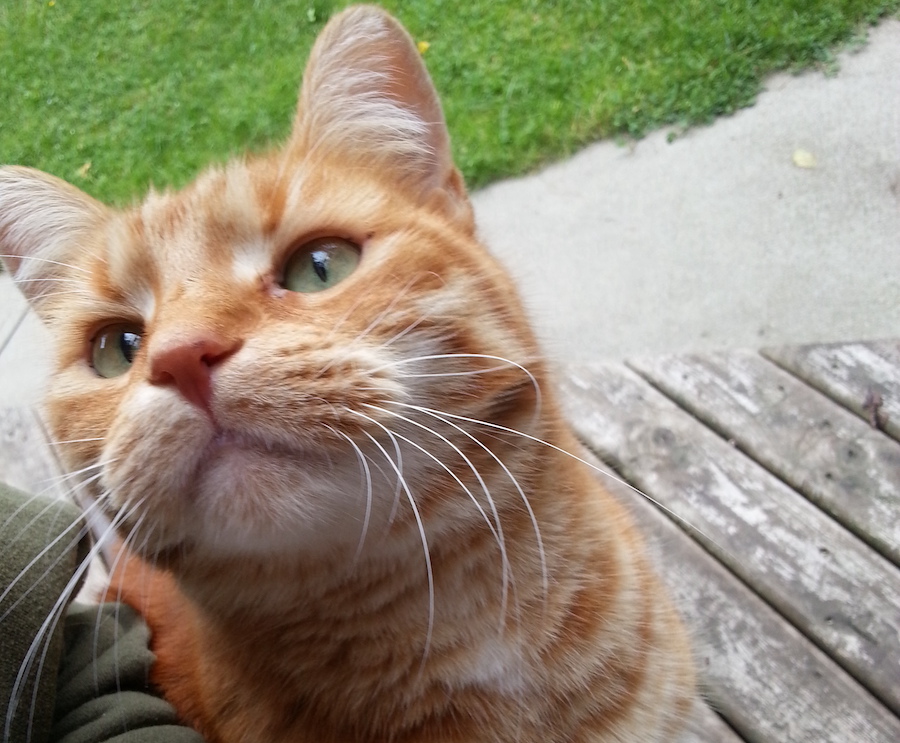
As I cuddled our youngest cat Jeremiah the other night, I marvelled at how utterly luxurious he felt, and it occurred to me to wonder—this was an entirely new thought for me—what’s a cat worth? What would people be prepared to pay for these wondrous furry, purring, affectionate, quizzical creatures? As I ran my fingers through Jeremiah’s thick, rich coat, I was struck by the high production values in a good cat: far surpassing even the most expensive stuffy toy. And they keep your feet warm at night! Such luxury! And for a moment, it seemed to me that a cat must be such a high-end creature comfort as to be only within reach of the well-to-do.
In the light of day, of course, I know what everybody knows: cats are worthless. Apart from the service fee charged by the SPCA (along with their guilt-inducing adoption papers), cats have no market value whatsoever. As commodities, they’re worth pretty much zero—because their supply is infinite. Or, if not infinite, certainly well in excess of demand in almost all cases and at all times.
The question of a cat’s value—their appeal, their affection, the comfort they provide, even their usefulness—is completely divorced from economics. Supply and demand dictate that no one need pay much, if anything, for a cat. Cats are effectively outside of the marketplace; their value cannot be translated into dollars and cents.
What interests me about this situation is that we have no trouble with it. And cats are the tip of the iceberg—there is a whole world of things that are enormously valuable and yet have no monetary value. Flower gardens, hallowe’en jack-o-lanterns, lullabies sung to children, smiles from strangers, skipping stones, all fall into this category. Cats, though, seem like they should be worth money. Or they did the other night when I had this thought. But they just aren’t.
So, when books begin to be priced at $9.99, and $4.99, $1.99, and below, book-lovers begin to feel something amiss. Our sensibilities get offended, because a book is worth something. Books are valuable things; they always have been, all though our lives. Those of us who grew up in literate households grew up valuing books well above other things, and so the idea of shelling out twenty or thirty bucks for a good book – a book that will stay with us – is not out of line at all. A bargain at twice the price, we might even say.
The trouble is that books seem to be heading into cat territory. Supply steadily increases—because of the ease of entry for new writers and publishers, because of the long tail of infinite availability, because of retailers like Amazon and Abebooks making books both new and old available to anyone anywhere, for as low a price as possible—and demand stays relatively still, because reading books has not gotten any easier or quicker, so the simple laws of economics suggest the price will go down. If supply outpaces demand to a significant degree and over a significant amount of time, the bottom falls out the market, and books start looking a lot like cats: clearly of fabulous worth to those who like them, but not worth anything as a market commodity.
‘Twas ever thus, actually… or at least, for as long as there has been a used-book market and people who love to pore over used bookstores, the fact of a radical separation between the value of a book to a given person—because of what’s inside, because of how it looks or feels, because of what memories or thoughts it evokes—and the price charged for it has remained. That said, the trade book industry as a whole has tended to try to operate as though the used book market doesn’t exist, but this becomes harder, since there is no clear retain boundary (e.g., the clean, well-lighted places vs dingy, dusty holes occupied by smelly old booksellers) between the old and the new, nor between the ‘traditional’ publishers and the ‘selfs,’ nor between the popular and the obscure. Cast into one vast melting pot of a marketplace, and the laws of supply and demand apply to all.
What is a book truly worth? What’s a cat worth?